Thinking about Time and a Happy New Year!
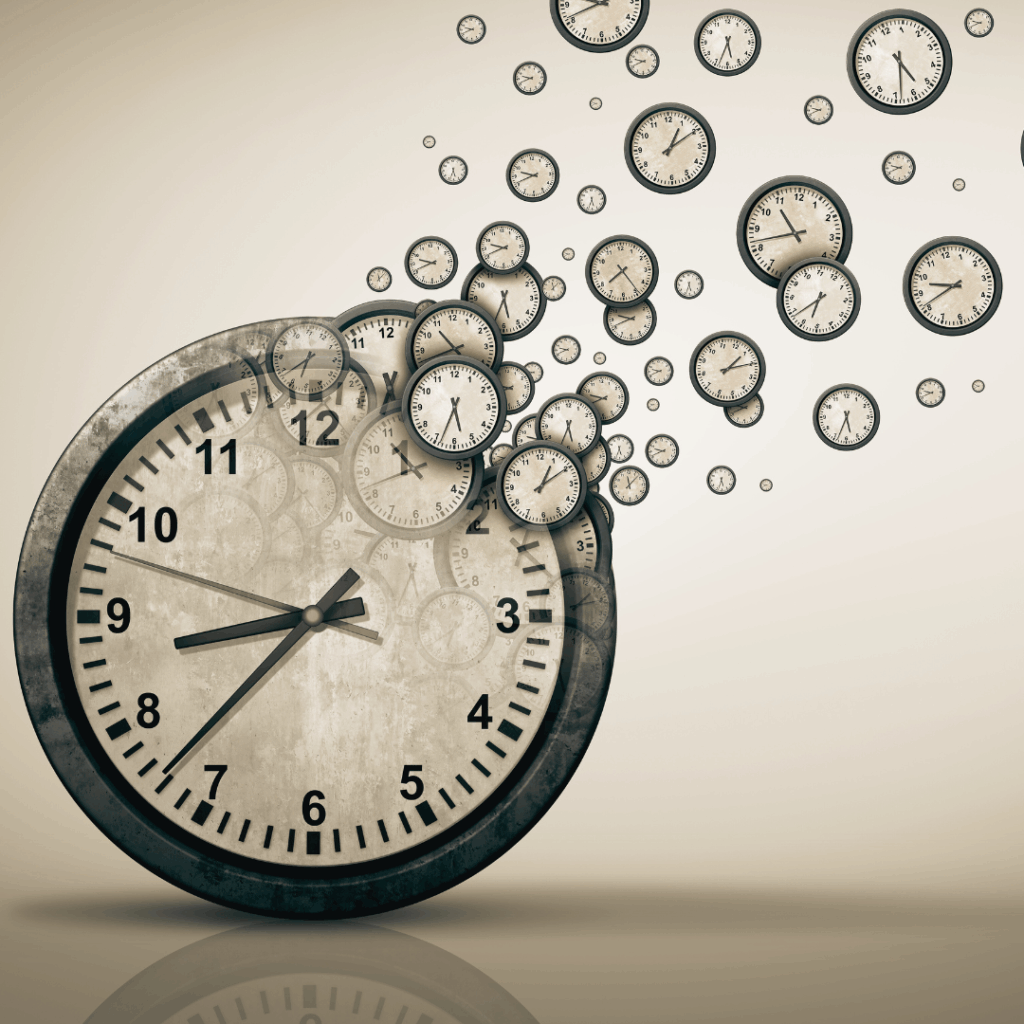
The seconds before the calendar slips from one year to the next are inarguably the moments when we are as a collective whole most aware of the passage of time. Sure, time flies when you’re having fun, and dread slows the clock to frozen molasses speeds. But one man’s second, minute, and hour is the […]
SWAN

The seconds before the calendar slips from one year to the next are inarguably the moments when we are as a collective whole most aware of the passage of time.
Sure, time flies when you’re having fun, and dread slows the clock to frozen molasses speeds.
But one man’s second, minute, and hour is the same as another man’s second, minute, and hour.
However, a human’s head’s second is not the same as a human’s feet’s second.
According to Einstein’s theory of relativity, gravity affects the passage of time. The stronger the gravitational pull, the slower time passes. As our feet are closer to the center of the Earth than our heads, time naturally passes slower for our feet than our heads.
Don’t panic about an old head on a young feet. This gravitational time dilation will only add up to about a 40 billionths of a second difference over the course of a lifetime.
Even at the top of Everest, the difference is only around 33 microseconds from a sea level clock.
While 33 microseconds are imperceptible to humans, that is not the shortest measurement available when it comes to measuring time. That honor belongs to the Planck, which is defined as the time it takes for light to travel one Planck length. To put that into a perspective, trillions of Planck time pass in the literal blink of an eye.
While experiencing a Planck with conscious perception is impossible, humans are more aware of time than we realize.
Researchers have conducted experiments wherein subjects were given a cause and effect task. Unknown to the participants, the researchers added a 100 to 150 millisecond delay between the cause and the effect. Participants noticed the delay at first, but soon adapted. The researchers then removed the delay. With their adjusted perceptions, participants now saw the effect happening before the cause due to their reversal of temporal order judgment.

Physical exertion, a traumatic event, or drug use can also alter a person’s perception of time. For some time speeds up. Others experience a vivid frame-by-frame memory that moves in slow motion.
Age also affects one’s perception of time. Kids whine about the roughly forever time between now and the arrival of some exciting event. Adults wonder where the last ten years went. Most believe that this is due to the fact adults have experienced more. With a child’s brain still in development and the constant need to learn new details and form new memories of new experiences, a child’s brain is constantly at work. An adult’s brain, that has already experienced many of the stimuli it encounters on a daily basis, makes much of that stimuli “invisible” as it has already been sufficiently mapped by the brain.
So there’s a reason we can pass from year to year through a continuum created by our same-old routine.
Time and our perception of it is a fascinating subject. It’s odd to realize just how much outside influences can affect our awareness of it. After all, if new experiences make it seem to children that time is passing slower, then why do vacations fly by when they are generally filled with new experiences?
A point to ponder.
While you ponder that, also ponder how much time you could save for your company with a custom solution. If you need development or other technology services, find out how we can help.