Vibe Coding For Mobile Development: Myth or Current Reality?
For a few months, Vibe Coding has been a thing that every tech magazine or blog is talking about. Numerous articles are featured like “Vibe Coder Wins Multiple Hackathons Without Writing A Line Of Code” or “Developer Creates New Programming Language In Two Days Using AI”. However, does all of this buzz have anything to […]
Technologies
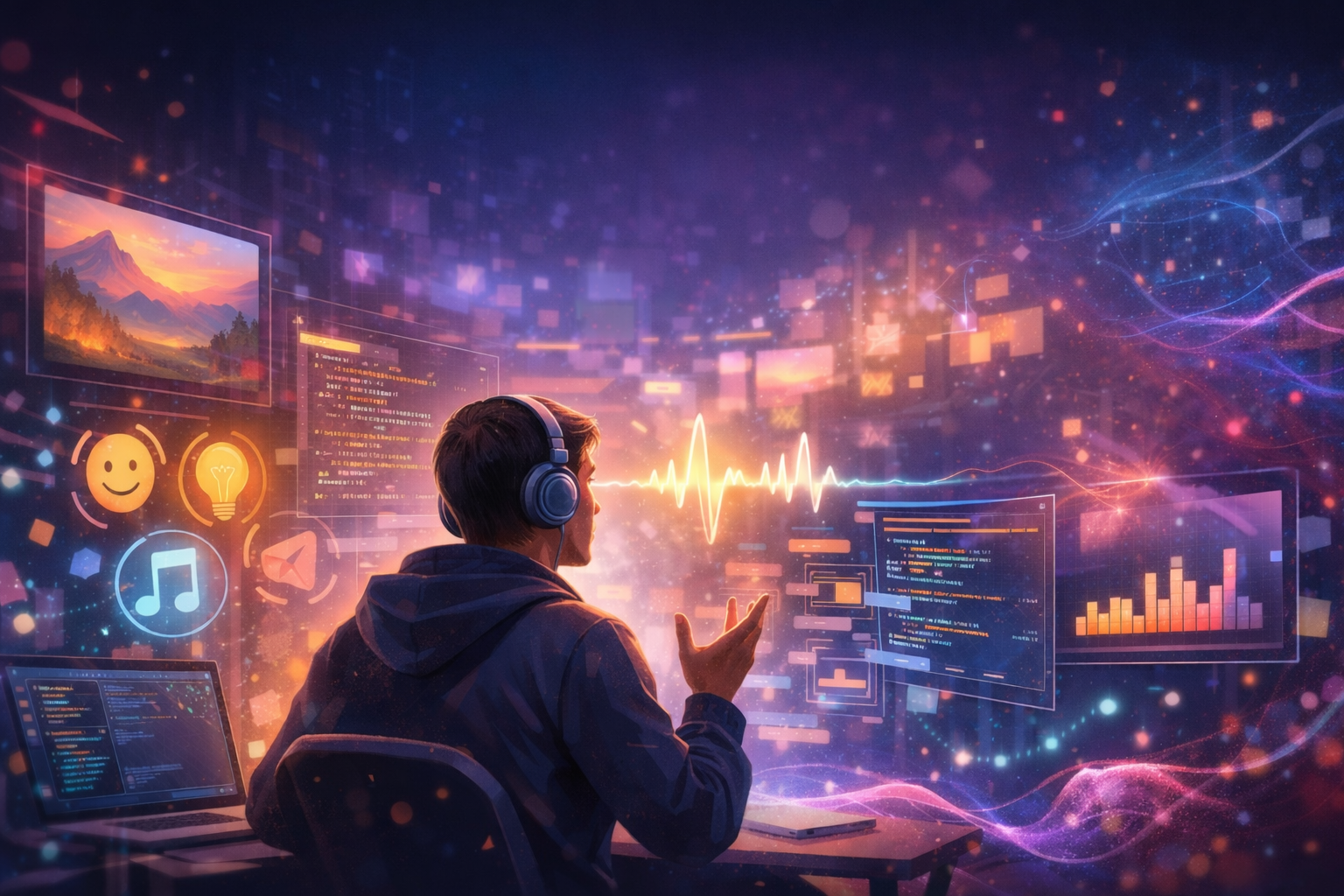
For a few months, Vibe Coding has been a thing that every tech magazine or blog is talking about. Numerous articles are featured like “Vibe Coder Wins Multiple Hackathons Without Writing A Line Of Code” or “Developer Creates New Programming Language In Two Days Using AI”. However, does all of this buzz have anything to do with the reality of developing?
Let me share my experience in this short blog post and my thoughts on vibe coding.
As a very proactive user of AI technologies in my work and everyday life, I can see Vibe Coding being possible in the very distant future, and only in very specific circumstances.
In my opinion, Vibe Coding will be possible in well-documented, mid-sized to small-sized projects as an autonomous assistant to a developer.
Now we can see automated AI assistance for code review, error analysis, call summaries, and other mundane tasks, so I assume that in the future we can allow AI to code some types of tasks. There is a possibility that AI can fully replace some junior to lower-mid level developers, QA, designers, and managers.
However, there are a lot of nuances that all those tech-savvy journalists never talk about, but I experience in my own practice.
I will concentrate on the three biggest ones that makes vibe coding not possible in the way it was sold to the audience and clients.
First, AI is really bad at understanding large-scale or long-term context. If your project works in a very specific field, with its own terminology and specific business processes, AI will struggle a lot. It is hard for AI to comprehend business processes as well as real humans or to understand all nuances as well as an employer with real experience in the field.
Second, AI is trained to never say no. Even if the task is unsolvable, AI would rather spend hours trying the same thing over and over than say that something is impossible. This makes the developing process go in circles in some cases and can frustrate clients and even damage business in the process.
There are a lot of cases lately where companies decided to be AI-first and later have to slowly come back to what they had previously. Partially, because of this problem. AI will spend time, money, and tokens to resolve something unresolvable, where a real developer will report issues to the team and take action in an indirect way.
Third, and I think most problematic, is that AI actually doesn’t generate anything from thin air; it uses references, docs, and articles. It is hard for AI to migrate to a library that was released a few days ago, hard to work with specific, not popular, or deprecated technologies, and hard to work with closed-source products and technologies. In cases like this (remember, AI is trained to never say no), most likely AI will hallucinate and try until it is stopped by your token quota.
I think that vibe coding is mostly a marketing term, rather than the current reality of development.
I think it can be achieved in some future, but in a very specific, controlled way. Like a fully automated conveyer line still needs an engineer to take a look at it all the time, AI and human developers need one another to achieve quality results.
And I think this will be like that for some time, until AI does some other quality revolution or AI bubble burst, and it will fall back to a regular work instrument like many others.
To discover more about how our team can help your team with its technology needs, schedule a free assessment.