Dead, But Not Gone: The Strange World of Digital Ghosts
Ghost decor is currently putting in its yearly appearance as Halloween approaches. Whether those ghosts are a sheet with holes or elaborate and disturbing entities, ghosts are everywhere. Most of us dismiss them since they are not real. One kind of ghost is real. Digital ghosts. A digital ghost is the “ghost” of a person […]
Technologies
Ghost decor is currently putting in its yearly appearance as Halloween approaches. Whether those ghosts are a sheet with holes or elaborate and disturbing entities, ghosts are everywhere. Most of us dismiss them since they are not real.
One kind of ghost is real.
Digital ghosts.
A digital ghost is the “ghost” of a person left behind on the internet when they pass away. The internet never really forgets. When a person dies, their digital ghost might not.
Email addresses, social media accounts, and even voice and images may remain.
No one quite knows what to do with these digital ghosts. Who owns the social media accounts of a person who has moved into eternity?
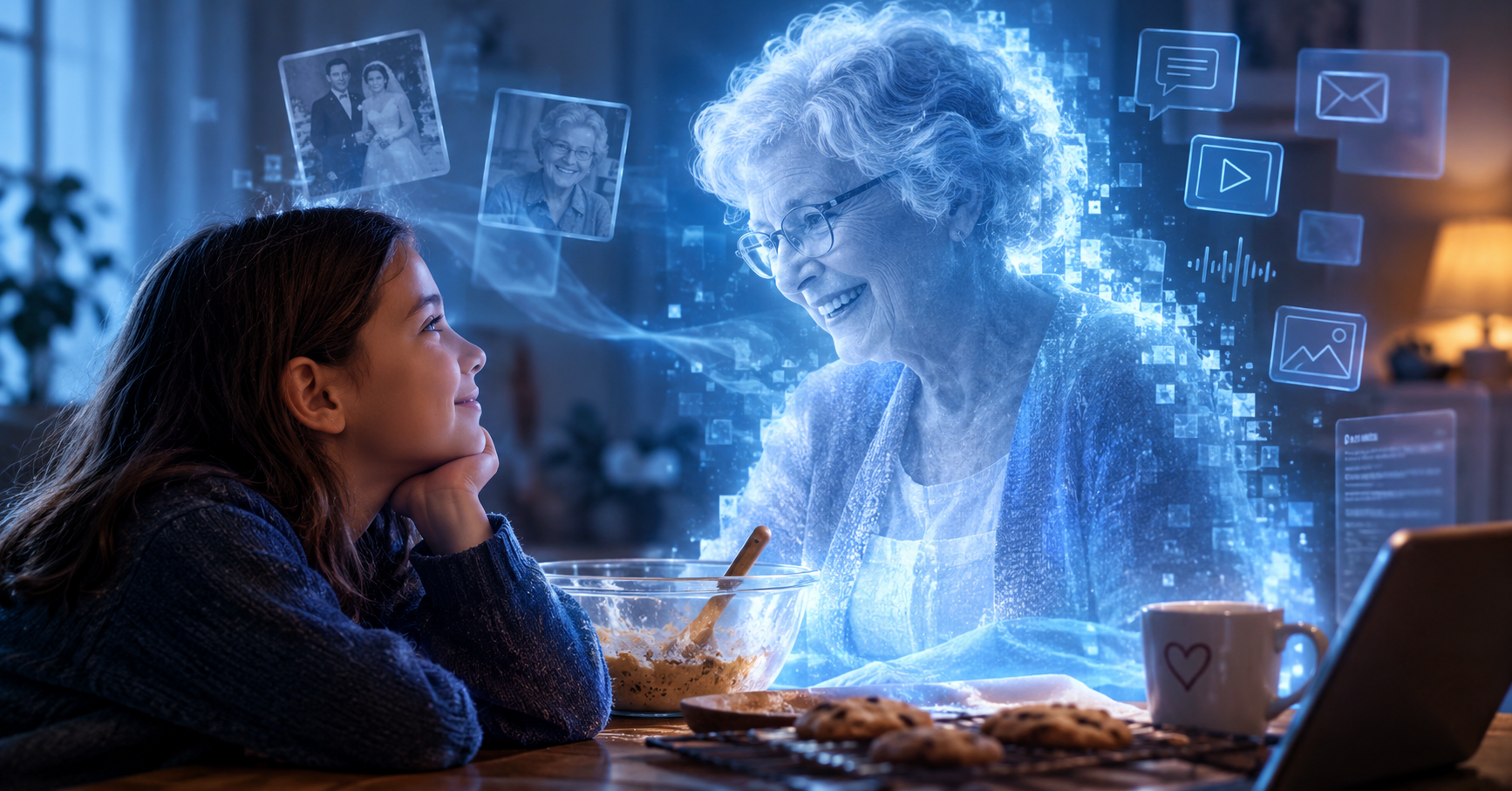
It used to be this sort of “ghost” was merely a social media page or email address, but with AI making simulated realities ever easier, what happens when a person has enough photos, videos, and other content left behind to create an AI entity that looks and sounds just like Grandma…until it doesn’t.

As is often the case, laws are trying to catch up to technology.
Consent provides a preliminary guideline. Some people give–or not– explicit consent–or denial–of whether or not his or her left-behind content can be used to create an AI that looks and sounds like he or she did when alive. Where it gets far more complicated is when the person made no such wishes clear.
Is it legal or ethical to “inherit” the rights to create a digital entity in the image of a person who once lived?
Even if permission and ethics allow the creation of this ghost-in-the-image-of-a-deceased-person, one must then face that it is run by AI, and AI is notorious for hallucinations and getting things wrong. One only needs a shallow dive to discover how bad AI can get when it goes wrong. So one minute, Grandma’s AI digital “ghost” might be helping a child bake cookies, and the next minute offering that child a recipe for explosives instead of snickerdoodles.
Even if AI ghosts offer disclaimers to users that they are not Grandma, human nature being what it is, even knowing it isn’t Grandma, it’s all too easy to let one’s self believe it is.
Even if Grandma isn’t offering recipes for drugs, AI is still putting words someone never said into his or her mouth. Imagine Grandpa had strong opinions on whether or not pets belonged in the house. With sycophancy a documented issue, Grandpa’s digital ghost might approve of Fido ripping the sofa apart in a way Grandpa-the-human never would have done.
And if these digital ghosts are created with all of Grandpa’s private content like emails or medical records, nothing is secret. All those private files–that might include emails with private information between Grandpa and still-living relatives–may end up fed into an AI.
Perhaps the biggest and most concerning danger comes from the humans left behind.
Mediums and psychics have existed almost as long as humanity, because letting someone we love go is hard. While an AI entity might seem like a balm to that very deep wound, the potential for exploitation is massive. Mediums and psychics have conned countless people out of massive amounts of money for one last connection with someone they loved. And that was a bit of garbled nonsense spoken by a human claiming it came from the loved one. Imagine how much more of a hold this digital entity will have on a person if they are an always-accessible digital version that looks and sounds so close to the real one. AI ghosts might just be the newest and most technology-savvy way to exploit someone’s grief.
What happens if the company raises their prices? Desperate people will be willing to pay to maintain contact with their loved one’s entity. That grieving person already lost his or her loved one once, a company will be able to charge astronomical prices so they can avoid losing them again.
If one gets past all the previous hurdles, one must then answer still more questions. Who controls the “ghost,” the company, the family, someone else? Imagine a grieving widow whose relative wants her to sell the house to con her out of part of the profit. Could this person gain access to the digital ghost and have this image and voice of her dead husband convince her to sell the house and give them part of the proceeds?
And what if the dead person is famous? Does the remaining family member have the right to have famous-deceased-father approve of a political candidate that dad never would have supported when he was alive?
Beyond control, who actually owns the entity? And who can decide when the AI ghost of a person is laid to rest like the human it mirrored? If the last relative of the said-famous person’s ghost passes away as well, does the company then have the right to make the digital ghost accessible to anyone who pays for it?
So while the technology exists, the ethics and laws of resurrecting “ghosts” still need to be added to and fully resolved. Is this technology a way to help people through grief or a new way to exploit the grieving?
At Swan Software Solutions, we use AI in the best possible way to provide our client with reliable, scalable, and affordable technology solutions. To discover more about how our team could help your team, schedule a free assessment.