Why manual testing is still important in the age of automation
In modern software development processes, almost every project has automation tests. It seems that the future of QA belongs entirely to scripts, frameworks, and bots that can test the product 24/7 without any downtime. And yet, despite all the advantages of automated approaches, manual testing remains the foundation without which a quality product is simply […]
QA/Testing

In modern software development processes, almost every project has automation tests. It seems that the future of QA belongs entirely to scripts, frameworks, and bots that can test the product 24/7 without any downtime.
And yet, despite all the advantages of automated approaches, manual testing remains the foundation without which a quality product is simply impossible.
Working as a QA engineer at Swan, I see every day how important it is not only to run a test, but also to understand how the product works and behaves, why the user might take certain steps, and what exactly can confuse him.
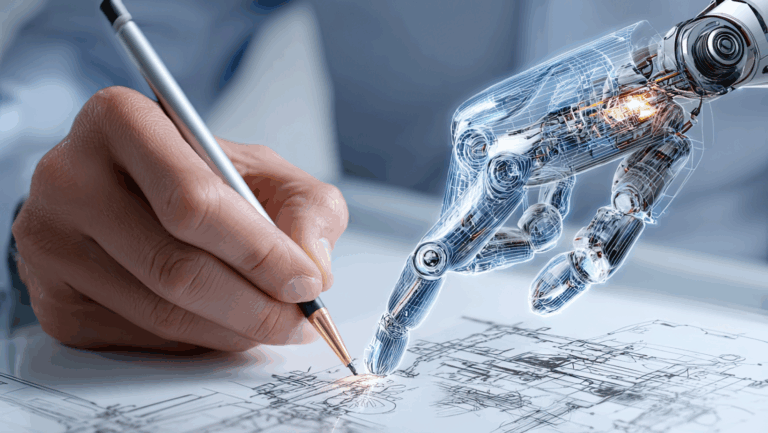
Automation tests the code, but manual testing tests a person interacting with the code.
And this is the main difference.

Automated tests do a great job with routine tests: they quickly run scripts, check thousands of data combinations. However, even the smartest script does not have and is not able to feel that something is “wrong” when, for example, a button looks strange, text sounds unintuitive or the behavior of a page causes confusion.
I had a case where autotests showed that everything was working perfectly. But during manual testing, I noticed that on the mobile screen a certain button was partially overlapped by another element. Functionally everything is fine, but the user physically could not press it on the first try. For automation, this is not a bug, for a person it is frustration. And it is for such moments that a QA manual is needed.
In product testing, a lot depends on logic, experience, and intuition.
Sometimes a tester feels that “something could go wrong” — and this leads to an important discovery. For example, when I test a new feature, I don’t just run test cases. I think like a user: what actions will he take if he gets into a certain situation? How will the system behave if he enters data in the wrong format? Will there be a separate notification for this?
This “outside the script” thinking cannot always be built into the program. It is born from experience, observation, which are inherent in a person. The power of manual testing — it is alive and able to notice details that scripts miss.
There is another important point, manual testing gives a deeper understanding of the logic of the product. When I personally go through all the scenarios, communicate with the team, analyze how a change in one module affects another — then I begin to see the system holistically. This is not just a “function check”, it is an acquaintance with the product at the user and code level at the same time.
Thanks to this approach, the QA manual in SWAN often becomes not just a checker, but an advisor to the team: it can suggest where the logic is confusing, whether additional messages for the user are needed, or even suggest a simpler solution.
This is the value that no automation will create.
One of the most important aspects is the interaction between manual and automation QA. Very often, in my experience, it happened that the results of manual testing became the basis for creating new automated tests. In other words, manual testing is like reconnaissance that opens up new danger zones.
In my experience, I have seen how, after several cycles of manual testing, the automation team added new tests because it turned out that the system was not behaving as everyone expected. Such cooperation makes the process more holistic and reliable.
The key point is the combination and close cooperation of manual and automated testing. Automation takes over more routine tasks, freeing up time for deeper testing and analysis, while manual testing adds human touch and better vision.
Together, they create a product that is both stable, convenient, and understandable.
At Swan, we combine automation tools with the expertise of manual specialists to ensure that every release is on time and defect-free. If you need quality assurance or other technology services, find out how we can help.